Why ChooseCoderMonk?
Before anyone asks which institute has the better fee structure or the nicer classroom, there's a quieter question sitting underneath all of it: will I actually understand what I'm doing by the end of this? This page won't tell you CoderMonk is the answer to that by default — it's here to show you what the experience actually looks like, so you can judge that for yourself.
Why CoderMonk Exists
DigitalMonk has been building real products — mobile apps, electronic hardware, and live digital marketing campaigns — since 2018. CoderMonk was built to teach from that same experience, not a generic syllabus.
Built on DigitalMonk's Foundation
Since 2018, DigitalMonk has shipped mobile apps, electronic hardware devices, and algorithm-driven digital marketing campaigns for real clients. CoderMonk exists to teach from that same experience, not a generic syllabus.
Closing the AI-Era Skills Gap
As AI accelerated how fast the market moves, we kept seeing the same problem: fresh graduates arriving with skills that were already out of date, many still working from pre-COVID coding practices. CoderMonk was built to close that gap.
Taught by the People Who Build the Products
Your mentors are the same people currently building DigitalMonk's mobile apps, hardware and marketing campaigns — not instructors reading from a fixed curriculum.
The Decision Students Face
Most students comparing a training institute in Jalandhar aren't choosing between good and bad marketing. They're choosing between institutes that all use similar words — "hands-on," "practical," "industry-ready" — with no easy way to tell which one means it.
Will I actually build something, or just watch someone else build it?
If I get stuck, is there someone who'll help me understand why — not just fix it for me?
Will I be able to explain what I built to someone else, like an employer?
Is this environment built for someone starting from zero, or does it assume too much?
Classroom vs Real Development
A syllabus tells you what was taught. It doesn't tell you what you can actually do with it.
Follow the Work, Not Just the Syllabus
Skip straight from "Understand" to "Document" and you get someone who can describe a concept in an interview but freezes the moment it doesn't behave as expected.
What a Student's Workspace Looks Like
None of this is staged for a photo — it's what an active project actually looks like while it's still being figured out.
From First Attempt to Finished Project
The middle three stages are usually the ones a rushed course skips past — they're also the ones that actually teach you how to think like a developer or an engineer.
The Mentoring Experience
Good mentorship isn't measured by how many answers you're given — it's measured by how much less you need them over time.
You ask a specific technical question, and get a specific answer — not a redirect to "check the documentation"
Someone helps you get unstuck without simply handing you the fixed code
An error message gets explained in terms of what actually caused it, not just how to make it disappear
Your working code still gets reviewed, because "it works" and "it's well built" aren't the same thing
You're pushed to improve an implementation you thought was already finished
Over time, you start predicting what a mentor would ask about your own code before they ask it
Meet Your Mentors
People who build these products for a living, not just teach the theory behind them.
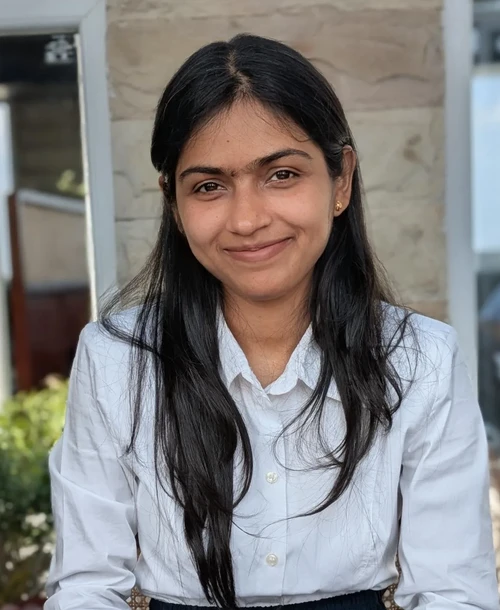
Chanchal
Electronics & Prototyping Mentor12+ years of experience developing electronics products and prototypes — from first breadboard to a finished, working device.

Aakriti
Full Stack & MERN Mentor4 years of experience developing web and mobile applications using full stack and MERN stack development.
Build Something You Can Show
"I learned React" and "here's a working application I built in React, and here's the code" land very differently in front of an employer.
A project that runs, not one that only worked on the day it was demoed
A GitHub history that shows how the project actually came together, not just a final upload
Documentation that explains your decisions, not just your code
The ability to walk someone through it and answer follow-up questions on the spot
A demonstration you're comfortable giving without reading from a script
The Technology Ecosystem
Understanding how a request moves through the whole chain is what makes the difference between knowing a technology and understanding a system.
Frontend
What a person actually sees and interacts with.
Backend
The logic that decides what happens when they interact with it.
Database
Where the result of that interaction is actually stored.
API
The agreed language the frontend and backend use to talk to each other.
Cloud
Where all of this actually runs once it leaves a laptop.
AI
A layer that can sit on top of any of this, making a decision instead of a person.
Embedded Hardware
Where software meets a physical sensor, switch or motor.
IoT
Embedded hardware that also talks to the cloud, tying the physical and digital together.
SEO / Digital
How people actually find and reach whatever was just built.
Learning Beyond One Course
Someone building Full Stack Development projects starts noticing where a machine learning model could realistically fit into a product, without needing to become an AI specialist
Someone learning Embedded Systems starts understanding why the software layer above their hardware is structured the way it is
Someone in Software Development starts recognising patterns that show up again in PCB Design — structured thinking, not the same syntax
Someone learning SEO & Digital Marketing starts understanding why a developer's technical choices affect how discoverable the final product actually is
The Jalandhar Advantage
A local, in-person, technology-focused environment removes a specific kind of friction that remote learning can't.
You don't need to relocate to access a technology-focused learning environment
Mentors are physically present, which makes asking a quick, specific question far easier than over a chat window
You're learning alongside other students from colleges you likely already know — not an anonymous online cohort
Practical sessions involving real hardware are genuinely hands-on, not shipped-to-your-door kits you assemble alone
Career preparation happens in person, including the uncomfortable parts like mock interviews and direct feedback
A Place to Ask "Why?"
When Things Don't Work
None of these are emergencies — they're the default state of building something real.
How to Evaluate a Training Institute
If you're weighing CoderMonk against other coding classes in Jalandhar or IT courses in Jalandhar, a few specific things are worth checking, regardless of which name is on the building.
Practical Work
Do students build real, working things, or mostly watch demonstrations?
Mentor Access
Can you ask a specific question and get a specific answer, quickly?
Project Depth
Are projects substantial enough to explain in a job interview, or superficial clones?
Technical Environment
Is there real hardware, real tooling and real debugging involved, not just slides?
Portfolio Opportunities
Will you leave with something documented and demonstrable?
Industry Relevance
Do the tools and practices match what companies are actually using right now?
Learning Support
What actually happens when you fall behind or get stuck for days, not hours?
Transparency
Are claims about outcomes specific and honest, or vague and inflated?
The CoderMonk Experience in One View
It's rarely a straight line — struggle and iteration tend to repeat more than once before clarity actually shows up.
Questions Students Should Ask Before Joining
These are worth asking any institute, CoderMonk included.
Will I be writing code or building hardware myself, every session, or mostly watching?+
What happens if I fall behind the rest of the group?+
Can I see an example of a finished student project before I join?+
Who exactly will be teaching me, and what's their background?+
Is the environment beginner-friendly, or does it assume prior experience?+
Will I leave with something documented I can show an employer?+
How much of the course is theory versus actual building?+
What does mentorship actually look like day to day?+
Is there support for mock interviews or explaining my own work out loud?+
What tools and technologies will I actually get hands-on time with?+
Are class sizes small enough for individual attention?+
What happens when something doesn't work as expected?+
Is there a clear structure, or is it loosely organised?+
Can I speak to the institute in person before committing?+
What's genuinely different here compared to another local institute?+
CoderMonk May Be a Good Fit If You Want
Come Build Something That Actually Breaks — And Fix It Yourself.
That's a more honest description of what happens here than any promise about outcomes could be. If that's the kind of learning you're looking for, the next step is a conversation, not a sign-up form.
Visit Our Campus
Above DigitalMonk, Near Domino's, Doaba Chowk, Jalandhar, Punjab 144004, India
CoderMonk, Doaba Chowk
Come see it directly, rather than take this page's word for it.
